
There was no postal intimation to unitholders who didn't have a registered email address, according to a letter that Midas Touch Investors Association sent to Sebi.

Equities in India saw record FPI inflows of $16.8 billion in November and December, taking the benchmark indices to new highs.

This is first time in 25 years that a benchmark equity index in India is trading at a P/E multiple of 40x or higher.

Tata Sons stake in the group's listed companies is now worth Rs 9.28 trillion, up 34.4 per cent on a year-on-year (YoY) basis. In comparison, the Government of India's stake in listed central public sector undertakings (PSUs) is currently valued at Rs 9.24 trillion

More people seemed to be returning to their workplaces towards the end of the year, even as railway and electricity numbers disappointed. Most other indicators held on to their gains.

While there were Rs 7.01 trillion worth of new assets in December 2019, this fell 88.6 per cent to Rs 80,000 crore for the three months ending December 2020, shows data from project tracker Centre for Monitoring Indian Economy (CMIE), reports Sachin P Mampatta.


The growth was led by family-owned companies and business groups with presence in pharmaceuticals, information technology services, and consumer products.

Rs 1,000 now buys $13.5 against $14 a year ago.

'Valuations were depressed at 8,000 (Nifty 50 index) levels. It was a free ride to 12,000 levels.' 'What went down had to come up. Now fundamentals have to support further gains.'

The year-to-date returns are 13.33 per cent for Indian funds, compared to 11.66 per cent for emerging market funds overall.

Reliance Industries accounted for Rs 6.3 trillion in wealth created since 1995; closest rival was Hindustan Unilever which was at Rs 4.9 trillion.

Some analysts see more upside in FMCG stocks given the performance gap between the sector and the market.
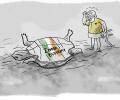
Business Standard tracks pollution levels, goods ferried by the Indian Railways and consumer visits to various categories of places, in addition to power generation and traffic numbers to understand the fast-changing situation on the ground.
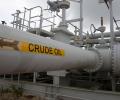
There is positive correlation between crude oil prices and Indian equities and investors can expect more upside after the recent rally in Brent crude price.

Pages for the Bharatiya Janata Party's Bihar arm (BJP Bihar), Janata Dal-United, and Chirag Paswan (of the Lok Janshakti Party) saw between Rs 15 lakh and Rs 30 lakh in ad spends.

Not surprisingly, equity investors are bidding-up stock prices across sectors and the broader market is now more valuable than pre-Covid levels.

Completed projects saw an improvement of 29.2 per cent over the June quarter, which is valued at Rs 0.31 trillion.

Shedding the stigma around failure, sharing issues with the family and seeking financial assistance from others can help alleviate distress and help people recover faster, says experts.

MEIL has become one of the fastest growing and most successful infrastructure and engineering, procurement, and construction companies in the country in recent times.
